Astronomical Events 2025/26
Check out the dates and times for astronomical events like equinoxes, solstices, meteor showers, eclipses, supermoons, and more.
2025
 4 Dec
4 DecDec 4: Super Cold Moon
The Cold Moon is one of the traditional names for the Full Moon in December because of the onset of winter in the Northern Hemisphere. For the second month in a row, this is also a Supermoon.
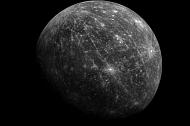
Dec 7: Mercury at Greatest Elongation West
 7 Dec
7 DecMercury reaches its farthest distance from the Sun in the sky—for the 6th and final time this year.
Dec 13/14: Geminid Meteors
 13 Dec
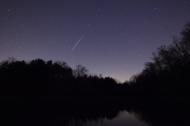
The Geminids peak around the night of December 13–14, depending on your time zone. It is usually one of the best meteor showers of the year.
Dec 20: New Moon
 20 Dec
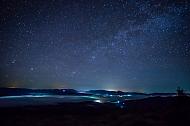
The final New Moon of 2025 falls at 01:43 UTC. A New Moon occurs when the Moon passes between Earth and the Sun—it is sometimes referred to as the invisible phase.
Dec 21: December Solstice
 21 Dec
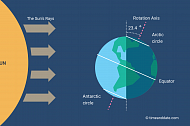
The December solstice takes place at 15:03 UTC. In the Northern Hemisphere, this is the winter solstice and the shortest day of the year. Meanwhile in the Southern Hemisphere, it is the summer solstice and the longest day of the year.
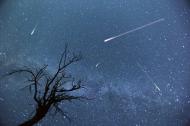
Dec 21/22: Ursid Meteors
 22 Dec
Once again, the astronomical year rounds off with the Ursid meteor shower, which usually peaks around this date.
2026
Jan 3: Wolf Moon
 3Jan
3JanThe first Full Moon of the year is colloquially known as the Wolf Moon in many northern cultures.
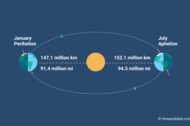
Jan 3: Earth at Perihelion
 3Jan
3JanAt around 17:15 UTC, the Earth reaches perihelion—the point on its orbit closest to the Sun.
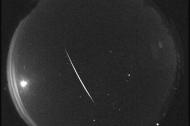
Jan 3/4: Quadrantid Meteor Shower
 3Jan
3JanThe first major meteor shower of 2026, the Quadrantids, peaks on the night of January 3 and the early morning hours of January 4 (depending on your time zone).
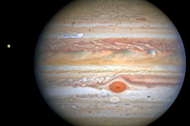
Jan 10: Jupiter at Opposition
 10 Jan
The massive planet, Jupiter, reaches the opposite side of Earth to the Sun, and is visible from sunset to sunrise.
Jan 18: New Moon
 18Jan
18JanA New Moon in the sky means no moonlight to hinder your view of stars and planets. Use our Interactive Night Sky Map to find out what planets are visible tonight and where.
Feb 1: Snow Moon
 1 FEB
1 FEBFebruary’s Full Moon is also known as the Snow Moon in many Northern Hemisphere cultures.
Feb 17: Annular Solar Eclipse
 17 Feb
An annular solar eclipse happens in a remote area of Antarctica. Parts of southern Africa and the southern tip of South America will see a small partial solar eclipse.
Feb 17: New Moon
 17 Feb
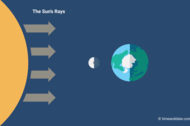
Take advantage of the New Moon to check out the skies with our Interactive Night Sky Map, weather permitting, of course.
Feb 19: Mercury at Greatest Elongation East
19 FebThis might be a good time to try and spot Mercury: The planet appears at its farthest distance from the Sun in the evening sky.
Mar 2/3: Total Lunar Eclipse
 3 Mar
3 MarThis is the last total lunar eclipse until the very end of 2028. Totality will be visible across parts of North and South America, Australia, and Asia.
Mar 3: Worm Moon
 3 Mar
3 MarThe Full Moon in March is traditionally called the Worm Moon, after earthworms that tend to appear around this time in many locations in the Northern Hemisphere.
Mar 19: New Moon
19 MarDark nights a few days before and after the Moon reaches its New Moon phase at 01:23 UTC on March 19 are the best nights to do some night sky watching—see our map!
Mar 20: March Equinox
 20 Mar
The March equinox is the first day of spring in the Northern Hemisphere and the start of fall in the Southern Hemisphere, by astronomical definitions.
Note: All dates are UTC, unless otherwise stated.